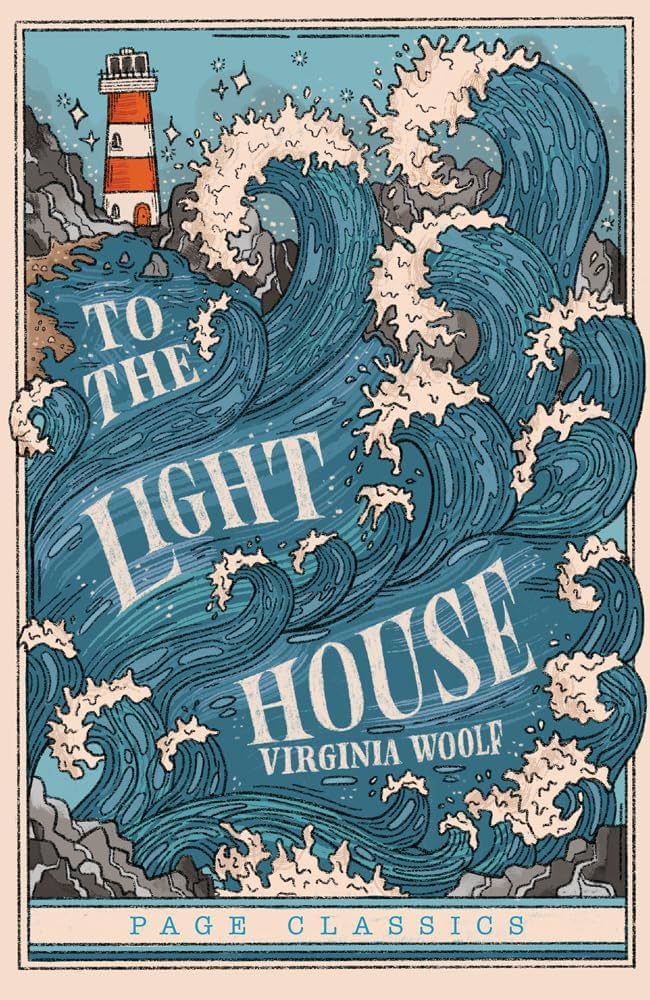
Where to start? Well, first of all, I’d like to apologize for my hiatus. School has been kicking my ass, but now that I’m in my last semester of undergrad, I want to make more time for this blog. I’ve read so many books since 2024, and I’m excited to share them with you all. I read To The Lighthouse for my literature and philosophy class this semester. At first, I wasn’t a fan of Woolf’s use of stream of consciousness and her lack of a concrete plot. But after sitting down with my professor and mentor, Dr. Maya Kronfeld, I was able to truly appreciate the beauty of Woolf’s imagination.
“Yes, of course, if it’s fine tomorrow,” said Mrs. Ramsay. But you’ll have to be up with the lark,” she added.
To The Lighthouse is about the Ramsays’ summer getaway to their Scotland house over the course of several years. The beginning of the story takes place a few years before World War 1. The story starts with the youngest Ramsay child, James, asking if the family could visit the lighthouse tomorrow. His mother, Mrs. Ramsay says yes if the weather is fine, but his father, Mr. Ramsay says no. James then feels an extreme emotion of anger towards his father for ruining his chance to go to the lighthouse. This simple exchange shows the reader that the world within the novel is dark and bleak. Hope and happiness are rare and fleeting emotions. Woolf weaves in many critiques about her society within the novel. For example, Mr. Ramsay. Mr. Ramsay is a brilliant, but standoffish, insecure, and rude man.
Despite the simplicity of the plot, there’s darkness intertwined within the novel. Time’s passage in the novel is much like a wave. It’s sporadic and rough, but it is there, and it is eternal. When you’re reading, the text will space out and describe everything that is happening in the Ramsay household and in the surrounding world. For example, when the Ramsay children go to sleep after dinner, the reader is taken on a journey within the world. The randomness of these spacings kept me on my toes for what was going to happen next. The point-of-view is brilliant. The book is in third-person which gives the reader distance to the characters, but the narrator is distant from the novel as well. This distance becomes a focal point throughout the novel. The third-person omniscient narrator adds a layer of complexity and richness to the novel. The stream of consciousness is something that I’ve grown to love about this novel. Woolf uses this technique to not only show time’s passage inside the Ramsay house, but outside of it as well. The combination of these techniques showed me how Woolf devalued human life within the book. From jumping to one characters thoughts to the thoughts of the world, Woolf sets up a societal critique of the devaluation of human life.
I don’t think I have the skills to explain how important this book is and how important Woolf is to literature. She ushered in the era of Modernism and fought back against the Romantics of the literary world. The fact that Woolf writes novels about everyday life is revolutionary. Most authors thought you had to have a concrete plot and some type of hero to properly write a novel, but Woolf did the exact opposite. She showed how everyday life deserves to be written about and why it should be. It’s interesting reading contemporary literature and seeing her influence within it. This novel is difficult to get through, but it’s so rewarding once you understand what’s happening.
 Haley's book look
Leave a comment